
Before buying MPPT controllers, confirm whether the system actually needs a separate unit. An inverter with suitable built-in solar charging may already cover the requirement. Where a standalone controller is needed, check its PV limits, battery voltage, charging current and control requirements together, rather than choosing by an amp rating or the lowest price.
This guide starts with MPPT versus PWM, then covers system layout, PV input, battery matching, site conditions and quote scope. Two tables help buyers separate the ratings and prepare an enquiry. FAQs and a short takeaway round out the guide.
What Do MPPT Controllers Do?
MPPT stands for maximum power point tracking. In a solar charge controller, it adjusts the PV array operating point and converts available solar power into a suitable battery-charging output. It is not a battery, and it does not replace the inverter needed to supply AC equipment.
The Victron PWM and MPPT comparison explains that PWM generally pulls array voltage towards battery voltage, while MPPT allows a different optimum array operating voltage. That does not promise a fixed energy gain at every site. System size, module matching, climate and whether the battery needs charging all affect the choice.
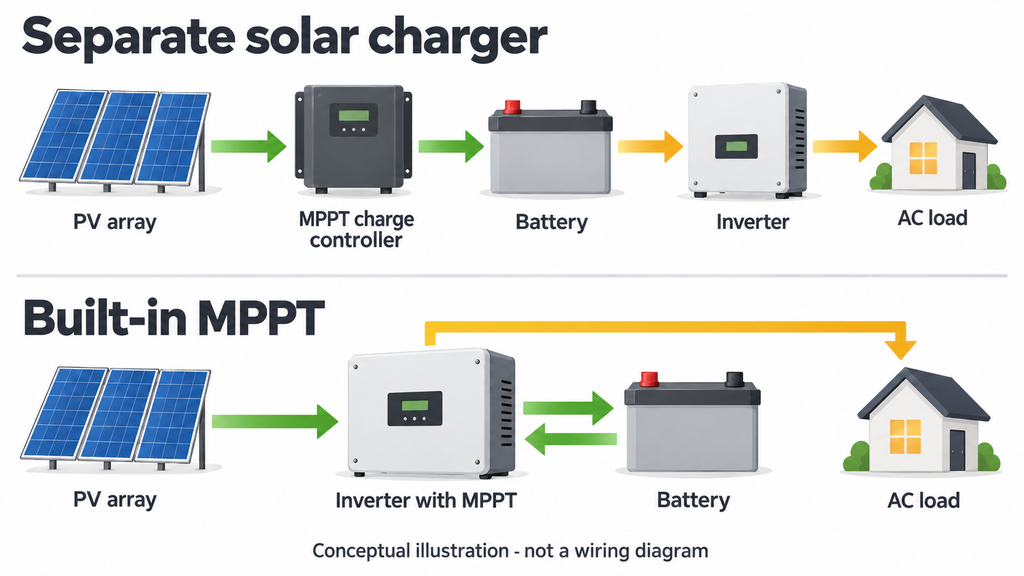
Check 1: Decide Whether a Separate Controller Is Needed
Ask the supplier to identify which device handles solar charging. The Victron integrated inverter example combines an inverter and an MPPT solar charger in one product. It shows why a separate controller is not always required, but it does not mean every inverter offers the same functions.
For an expansion, provide the exact equipment models and the existing system diagram first. Adding panels is not, by itself, a reason to add another charging path. Use the hybrid inverter and battery matching guide for the wider system review, then ask the designer to confirm whether another controller is appropriate.
Check 2: Separate PV Voltage and Current Limits
A larger amp number is not a substitute for a full specification sheet. The Victron controller rating guide lists maximum PV voltage separately from maximum battery charge current. Buyers should also request the PV short-circuit current limit, supported battery voltages and PV power conditions. Input-side current and battery-side current are not interchangeable.
Module open-circuit voltage, or Voc, is not the same as maximum-power voltage, or Vmp. The Victron PV array guidance notes that Voc rises in colder conditions. The designer should check the array against site temperatures and the selected model, not just panel wattage. This guide does not provide a universal series or parallel wiring recipe.
| Rating | Meaning | Buyer question |
|---|---|---|
| PV voltage | Open-circuit ceiling and operating range differ | Has the array been checked for site temperatures? |
| PV current | Limits on the PV input side | What are the operating and short-circuit limits? |
| Charge current | Current delivered to the battery | Does it meet the battery limits? |
| Battery voltage | Supported battery platform | Is the exact battery model supported? |
Check 3: Verify the Battery Match, Not Just a Lithium Label
Request a written match for the exact battery model. It should identify permitted charging voltage, current, temperature conditions and any required BMS control or communication. A lithium-mode label alone is not enough to approve the complete system. Do not copy charging settings from a different battery.
List any inverter-charger or other charging source in the project information as well. Ask the system designer how the charging sources will stay within battery limits and respond when the battery requests charging to stop. The useful answer is a documented design response, not a claim that the equipment works with every lithium battery.
Check 4: Confirm Site Conditions and Monitoring
For a Nigeria project, describe the actual location, indoor or outdoor setting, ventilation, and exposure to dust or moisture. Sites are not interchangeable. The Victron technical specification table lists operating temperature, full-output conditions, enclosure protection and communication separately. These are model-specific details, not features to infer from a product photograph.
Ask the quote to state which operating records are available, whether a gateway, internet connection or paid service is needed, and who handles alarms after handover. The solar maintenance guide can help organise logging and reporting responsibilities. Bluetooth access, remote monitoring and battery BMS communication should not be treated as the same feature.
Check 5: Compare Quotes on the Same Scope
When comparing quotes for MPPT controllers, ask for the full model, quantity, included accessories, documentation, warranty scope and lead time. A low price may cover only the device. For module purchasing costs, see the solar panel price guide; a panel unit price is not the price of a complete charging system.
The table below is an enquiry checklist, not an installation checklist. Mark unknown items as needing confirmation rather than guessing equipment details to obtain a faster quote.
| Information | What to send | Purpose |
|---|---|---|
| Project scope | Location, application, quantity and schedule | Separate new and expansion projects |
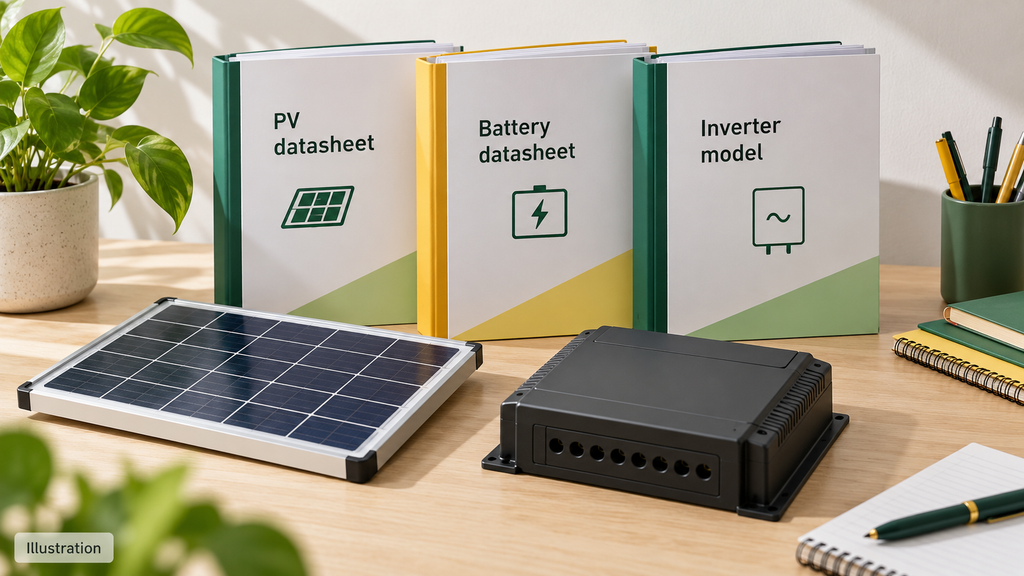
| PV details | Model, datasheet, quantity and existing layout | Enable the designer to check PV limits |
| Battery details | Model, datasheet and BMS requirements | Confirm charging compatibility |
| Other equipment | Inverter and other charger models | Identify overlapping or conflicting functions |
| Commercial scope | Accessories, documents, delivery and support | Compare equivalent offers |
FAQs About MPPT Controllers
Is MPPT Always Better Than PWM?
Not on the name alone. MPPT generally offers more flexibility in matching PV voltage, but cost and actual energy needs still matter for a small system. A manufacturer’s energy-gain range should not become a guarantee for the project.
Does an Inverter with MPPT Need Another Controller?
Not necessarily. Check the built-in functions, input limits and system design first. Add a standalone unit to the purchase scope only when the reviewed design calls for another charging path.
Can Panel Wattage Alone Determine the Controller?
No. Voltage, current, battery compatibility and site conditions still need checking. Exact model numbers and datasheets give the supplier a better basis for review than total panel wattage alone.
Key Takeaway
First confirm the need for a separate device, then check input limits, battery compatibility and the complete supply scope. Suitable MPPT controllers are supported by a documented equipment match, not simply the largest amp label or the lowest price.
For a solar equipment purchase, send Solaura the details above for a system-level equipment review. Available standalone controller models, accessories and support must be confirmed in the quote. This guide does not imply brand authorisation, stock availability or an on-site installation commitment.
Found this helpful? Share it with your network.
👇