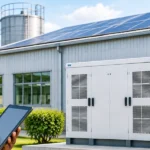
BESS sizing is not just a matter of multiplying load power by backup time. A practical estimate also considers starting power, usable battery capacity, inverter efficiency, backup depth, solar input, system losses, and future expansion.For a commercial project, the energy storage system should be sized from the site load and backup target, not from battery capacity alone.
kW shows how much power the system must deliver at one moment. kWh shows how much energy is needed over a period of time. The first figure mainly affects inverter or PCS power, while the second affects battery capacity.
Table of Contents
What BESS Sizing Needs to Consider
A basic estimate starts with this formula: backup energy = backup load x backup hours. This result is only a starting point and should not be used as the final order size.
The buyer also needs to separate the total load from the critical load. If the goal is to keep lighting, communications, refrigeration, or selected production equipment running during an outage, the calculation should use the loads that must stay on rather than the site average.
A Simple kW and kWh Sizing Method
First, record the normal load, maximum load, and starting power of the equipment. Pumps, motors, compressors, and refrigeration equipment may need much more power at startup, so the daily average alone is not enough.
Second, define the critical load and the required backup time. Third, multiply the critical load by the backup hours to get the basic energy need. Fourth, adjust the rated battery capacity for usable battery percentage, inverter efficiency, wiring losses, and a practical reserve.
Battery and Inverter Checks
The inverter or PCS needs to cover continuous power and handle the short surge when equipment starts. The battery maximum charge and discharge current must also match the PCS power, voltage platform, and BMS communication method.The selected solar inverter should also match the battery voltage, charge and discharge current, and BMS communication method.
Before requesting a quote, confirm the battery rated voltage, capacity, maximum charge and discharge current, usable capacity, cycle requirement, operating temperature, and protection functions. For an existing battery, provide the brand, model, datasheet, and communication interface as well.
BESS Sizing Example for a Commercial Site
Assume a commercial site has a 50 kW critical load and needs four hours of backup. The basic energy need is 200 kWh. After allowing for usable battery percentage, inverter losses, and reserve, the final rated capacity needs to be higher than 200 kWh. The actual value still needs to be checked against site data.
| Project | Example | To confirm |
| Critical load | 50 kW | Does it include the starting power? |
| Backup time | 4 小时 / 4 hours | Power Outage Records and Critical Load Priorities |
| Basic energy | 200 kWh | Available capacity, losses and safety margin |
| System configuration | Battery + PCS/inverter | Voltage, current, BMS communication and installation environment |
This example explains the sizing logic; it does not represent a fixed model or final quotation. A project buyer can provide a 24-hour load profile, critical-load list, backup target, solar capacity, and grid condition for a system-level review.For background on battery storage technology, see the IEA battery storage overview.
FAQ
What is the difference between kW and kWh in BESS sizing?
kW mainly affects instant power and inverter or PCS size, while kWh mainly affects how long the battery can supply energy.
Is a larger battery always better?
Not always. Capacity should match the critical load, backup time, charging source, available space, system power, and budget.
What should be prepared before requesting a BESS sizing quote?
Prepare the site location, load list, maximum and starting power, backup time, solar capacity, grid or generator conditions, installation environment, and order quantity.
Request a Project Review
For a commercial storage review, submit the site location, load list, backup time, solar capacity, grid condition, installation environment, and order quantity.
Found this helpful? Share it with your network.
👇