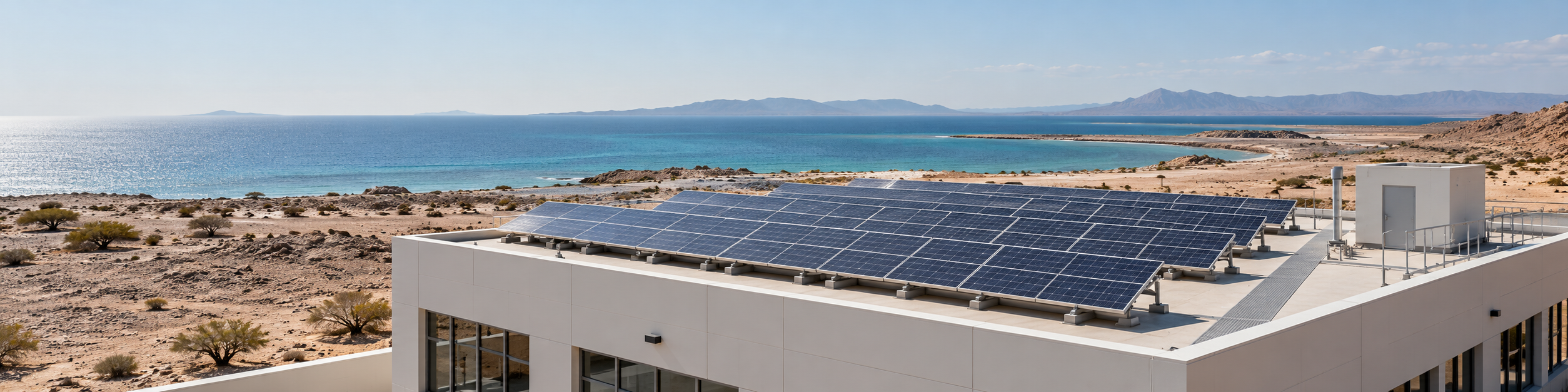
Djibouti solar projects deserve a closer look, but a country report cannot replace site data, project approvals or a financial assessment. Before buying, confirm the approval route, actual electricity use, energy arrangements, equipment acceptance requirements and service responsibilities. A news headline is not a reason to place an order, and batteries should not be assumed necessary for every project.
This guide explains what the new report can establish, then sets out five checks before requesting a quote. Two tables organise responsibilities and quote scope. Battery storage is considered separately, followed by FAQs and a short takeaway.
Table of Contents
How to Read the Djibouti Solar Report
The September 2026 IFC country report overview identifies off-grid solar as one area that could benefit from policy action. It is an assessment of opportunities and constraints, not evidence that an individual business project has been approved.
The full Djibouti private sector diagnostic states on printed page iv that the report and the underlying data collection were completed in early April 2026. Printed pages 22–26 discuss constraints and recommendations. The checks below are editorial guidance for project preparation, not a statutory checklist issued by the report.
Check 1: Obtain Project-Specific Approval Advice
Identify the location, site owner, intended use and proposed grid connection. Ask a qualified local adviser to confirm the required permissions, applicant, documents and sequence. Record the date and conditions of that advice. A verbal statement that solar can be installed is not a substitute for formal confirmation.
For leased premises, check roof rights and the remaining lease as well. A preliminary quote can use stated assumptions, but unresolved approvals should not lead straight to an irreversible purchase. This guide does not confirm current permit thresholds or processing times.
Check 2: Use Site Bills and Load Records
Collect electricity bills, business hours, consumption records and outage logs. Separate equipment that runs throughout the day from night-time or intermittent loads. A warehouse, shop or production facility may be a useful assessment case, but those sites should not share an assumed load profile.
Require the proposal to use the charges that actually apply to the account and the available site records, rather than a national average from a headline. If records are missing, agree on a measurement plan first. Estimated savings should not appear more precise than the evidence behind them.
Check 3: Define How the Electricity Will Be Used
State whether the project is for self-consumption, includes backup needs, or is intended to supply other users. If the model includes surplus electricity sales, request the applicable agreement, pricing basis and approval confirmation. Until those conditions are established, export revenue should not be treated as assured cash flow.
Also identify who owns the equipment, pays operating costs and carries performance obligations. Different ownership or energy contracts can allocate risks differently. Equipment price alone does not settle which arrangement is suitable.
Check 4: Agree on Documents and Acceptance
Ask for exact models, datasheets, relevant compliance documents and a defined supply scope. The project team should check that documents match the equipment offered. Have the designer review site temperature, dust, corrosive exposure and installation space rather than selecting equipment from photographs.
Before ordering, agree on tests, pass criteria, records and the person authorised to accept the work. If storage is included, use the BESS procurement documents guide for battery and PCS documentation. This article does not repeat a full equipment specification checklist.
Check 5: Assign Support After Delivery
Separate equipment supply, import logistics, installation, commissioning and after-sales support. A supplier willing to ship equipment may not provide local installation or immediate repairs. Ask for named contacts, response arrangements, spare-parts plans and the warranty claim process.
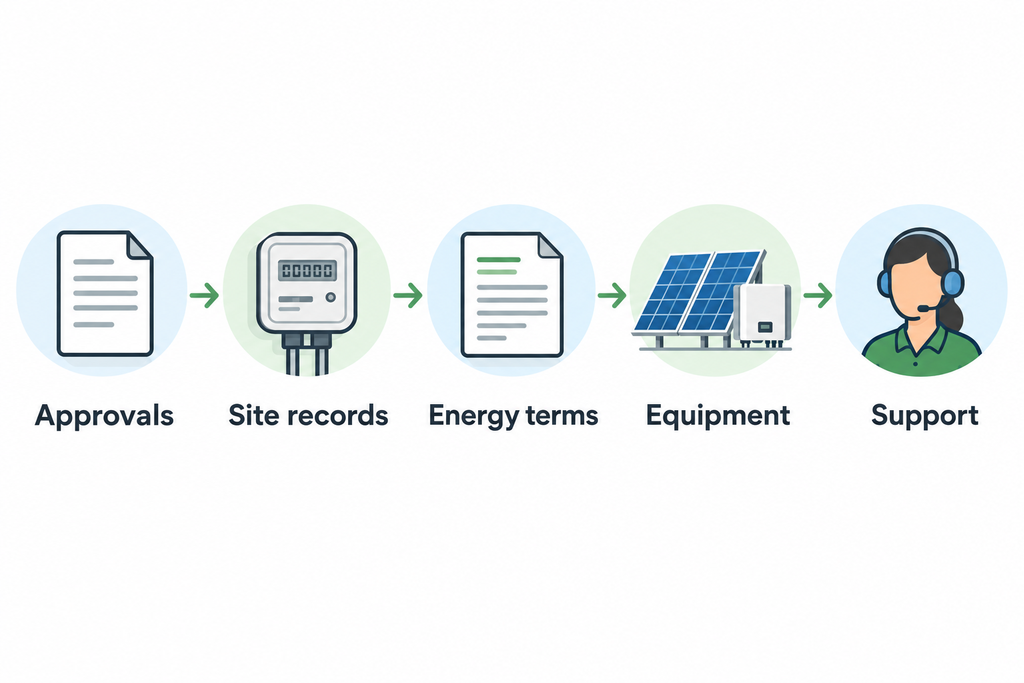
Use the table below to assign responsibility for evidence, not to replace local engineering or legal review. Keep unknown items marked as pending with an owner, rather than filling gaps with guesses to obtain a faster quote.
| Check | Evidence to obtain | Confirm with |
| Approvals | Applicable requirements and written advice | Local adviser and relevant authority |
| Loads | Bills, consumption and outage records | Site operations lead |
| Energy terms | Self-use scope or supply agreement | Owner and contract adviser |
| Equipment | Exact models and acceptance criteria | Designer and supplier |
| Support | Responsibilities and claim process | Contractor and supplier |
Why Battery Storage Needs a Separate Assessment
The solar model assumptions on printed page 52 of the report state “Batteries: No storage.” This limits what the model can establish; it does not mean Djibouti does not need batteries. The model should not be presented as a solar-plus-storage market forecast.
If a business needs outage backup, list critical loads, acceptable interruption time, target duration and recharging conditions separately. Start with the business battery storage guide, then have the designer compare configurations with and without storage. A solar report alone is not a reason to buy batteries without a defined service target.
| Stage | What can be provided | What it does not establish |
| Initial enquiry | Needs, assumptions and missing information | Approval or proven returns |
| Technical review | Reviewed site conditions and design scope | All contractual duties are settled |
| Order confirmation | Agreed configuration, price, delivery, acceptance and support | Guarantees beyond the agreed scope |
FAQs
Does the report mean installation can start immediately?
No. Obtain confirmation for the location and proposed configuration before committing to procurement and site works.
Is there a standard payback period?
Not from a country report. An assessment needs site costs, energy use, actual charges, contract terms and maintenance assumptions, with uncertainties made clear.
What is needed for a first quote?
Send the location, application, bills and load records, existing equipment, approval status, installation space, service target and schedule. With incomplete information, request a preliminary proposal with stated assumptions, not a final performance commitment.
Key Takeaway
Djibouti solar opportunities need site evidence before they become procurement decisions. Confirm approvals, loads, commercial arrangements, acceptance and support first. Assess storage separately.
Submit those details to Solaura for an initial equipment supply-scope review. Product availability, shipping, local installation and support responsibilities must each be confirmed. This guide does not establish a local service commitment.
Found this helpful? Share it with your network.
👇