Battery storage for cold rooms should start with daily operations and measured electrical demand, not a battery size chosen from room capacity alone. For a food business considering lithium iron phosphate (LFP) storage, record when goods arrive, how refrigeration equipment runs and when the battery can recharge. Storage can form part of the power plan, but it cannot replace checks on refrigeration performance or product temperature requirements.
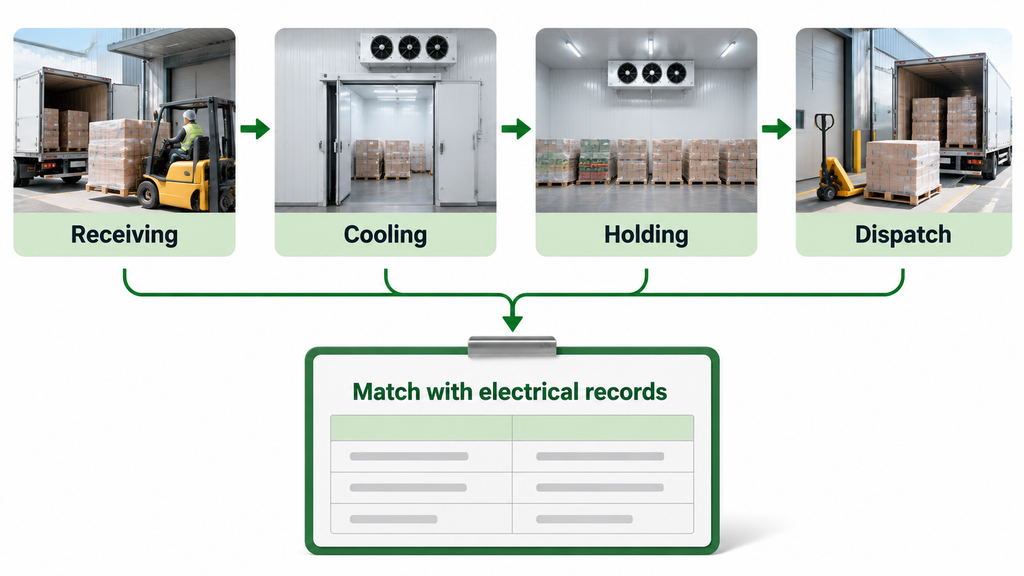
This guide follows receiving, cooling, holding and dispatch, then turns those activities into a practical information sheet for storage assessment. It does not present an unverified installation, a fixed savings percentage or a payback promise. The focus is the daily operating plan rather than a general outage checklist.
Table of Contents
Start With the Work the Cold Room Must Do
Record whether the room holds goods that are already cold or receives products that need cooling, and whether freezing or other processing is involved. FAO cold-store guidance explains that stores with the same capacity can have different refrigeration loads because of design, local conditions and product mix. Storage capacity therefore cannot be converted directly into battery capacity.
The enquiry should identify the product, normal goods movements and existing refrigeration equipment. Equal room volume does not mean equal working conditions. This article does not prescribe safe food-storage temperatures or an acceptable period without cooling. Those conditions must come from product requirements and applicable professional guidance.
Record Receiving and Cooling as Distinct Activities
List incoming product temperature, quantity and the required cooling period separately. NC State refrigeration-load guidance distinguishes heat from incoming produce, respiration, the building envelope and room use. This explains why one room-temperature reading is not enough. Its fresh-produce context matters: respiration-related assumptions should not be copied to every frozen-food application.
Match receiving times to electrical records for the same intervals. Note whether other rooms or production equipment are running so that whole-site demand is not mistaken for one cold room. A measurement from a quiet period should not be treated as the demand for the entire working day.
Holding and Dispatch Are Different Operating Conditions
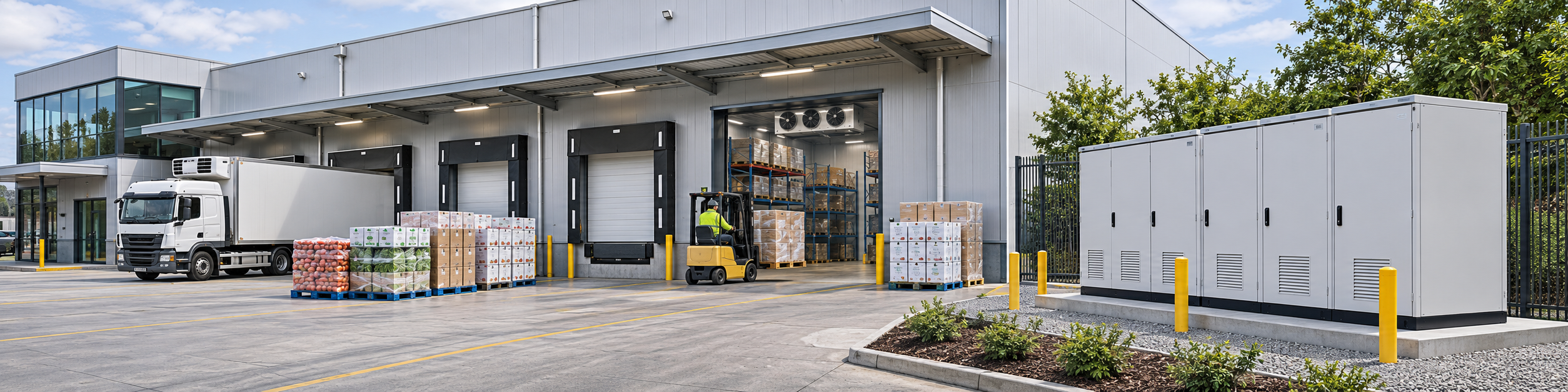
FAO describes door-related heat infiltration as dependent on openings, traffic and conditions inside and outside the store. A purchasing record can therefore include door-opening frequency and duration, plus whether loading activity is concentrated into particular periods. An unverified universal percentage allowance is not a substitute for that information.
Use operating records to add the timing of equipment such as defrost systems, fans and lighting. Do not assume the compressor runs at its rated electrical input all day, or that there is no electrical load at night. The operating stages help explain changes in measurements; their names do not establish a fixed energy requirement.
Keep Cooling Capacity Separate From Electrical Input
A refrigeration datasheet may list cooling capacity and electrical input. Even when both use kW, they are not the same quantity. A battery assessment needs electrical input and how it changes over time. Ask for clearly labelled ratings, their operating conditions and whether auxiliary equipment is included.
The energy to be supplied by the battery comes from the selected loads over the intended operating period. Confirm continuous output, starting requirements and usable energy separately. The BESS sizing guide helps organise those different quantities. No fixed cold-room configuration is proposed here without site data.
Put the Recharge Window Into the Operating Plan
For battery storage for cold rooms, identify the periods to be supported and the charging source available afterward. If solar charging is proposed, also review refrigeration and other demand during that interval. Total PV generation should not automatically be counted as energy available to charge the battery.
The LFP chemistry label does not establish compatibility of the complete system. Review the quoted battery, PCS or inverter, controls and site power sources together. Model-specific charging and discharge limits, usable capacity, losses and auxiliary consumption need to be stated. Leave unconfirmed items open rather than filling them with an assumed industry average.
Operating Records for Battery Storage for Cold Rooms
The table below collects information; it is not data from a completed project. Distinguish measured values, equipment ratings and items awaiting confirmation. Electrical and temperature records need matching time references. The BESS monitoring guide can help organise record and export requirements.
| Stage | Records to provide |
| Receiving and cooling | Product, quantity, arrival temperature, schedule and matching electrical records |
| Holding | Temperature and refrigeration records, with concurrent auxiliaries |
| Handling and dispatch | Door activity, dispatch times and matching demand |
| Battery support | Selected loads, target periods, continuous and starting requirements |
| Recharge | Available sources, charging windows and competing demand |
When to Gather More Evidence Before Ordering
A room tonnage, monthly bill or single temperature screenshot is not enough to establish the required battery output and duration. A new project can use professional design estimates with stated assumptions and a verification plan. An existing site should prioritise records that explain both busy and quiet periods.
If refrigeration equipment cannot meet its intended operating requirements, suitable professionals should investigate the cause first. Adding a battery does not automatically correct cooling-capacity, door-seal or airflow problems. Do not interrupt power or change food-temperature settings as an informal storage test.
Buyer Questions
Can Equal-Sized Cold Rooms Use the Same Battery?
Not on tonnage alone. Compare electrical demand, incoming goods, operating periods and charging conditions before deciding whether the same configuration is suitable.
Does Battery Storage Guarantee Product Temperature?
No. Electricity is only one part of the system. Product temperatures still depend on refrigeration equipment, handling, monitoring and applicable operating requirements.
Key Takeaway
Battery storage for cold rooms starts by connecting operations to electrical demand before selecting an LFP configuration. Receiving, cooling, holding, dispatch and recharge conditions determine the evidence needed. Where those records are missing, collecting them is more useful than ordering a battery from room capacity alone.
When discussing battery energy storage systems with Solaura, provide the location, room purpose, equipment models, load records and planned charging sources. Equipment selection and supply scope remain subject to the confirmed proposal and quotation.
Found this helpful? Share it with your network.
👇