
Custom BESS solutions should address a clear mismatch between a standard configuration and the site, not start with an assumption that the battery must be redesigned. For a business considering lithium iron phosphate (LFP) storage, define the operating goal first. Then check whether a standard system meets it, or whether equipment options, control configuration or an approved design change need assessment.
This guide is for commercial storage buyers in Nigeria and other African markets. It follows a site requirement through configuration choices, a requirement-to-evidence worksheet and proposal review. The focus is deciding what actually needs to change, rather than producing another general request-for-quotation checklist.
Table of Contents
Start With the Outcome the Site Needs
A request for custom energy storage solutions in Africa still needs a specific operating objective. That might be keeping selected production auxiliaries running during an outage, or using daytime solar surplus during a later shift. State the equipment that must remain in service and the periods that matter. Mark unverified requirements as open rather than turning them into promised capabilities.
Check whether storage is the right response before specifying changes. An equipment fault, an unsuitable protection arrangement or a scheduling problem may need a different remedy. Keeping the existing system and correcting an identified issue belongs in the assessment alongside adding storage. Electrical faults and settings should be reviewed by qualified personnel, not tested through informal changes at a working site.
Separate the Layers of Custom BESS Solutions
The first layer is selection within an approved product range, such as choosing a power and energy combination that suits the load. This is application selection, not necessarily a new cell design or a new product. Review usable energy and output conditions for the complete system rather than relying only on the cabinet nameplate. The BESS sizing guide explains the power and energy distinction in more detail.
The second layer is site integration: how existing solar, distribution, metering, controls and monitoring work with the selected equipment. A third layer is a product change beyond documented options. Changes to an enclosure, thermal management or software behaviour need supplier confirmation and an explanation of validation, delivery and service implications. A custom label alone does not establish that these changes are available.
Test the Standard Proposal Against One Site Scenario
Consider an illustrative warehouse with existing solar and a diesel generator that wants selected equipment supported during outages. This is a planning example, not a Solaura installation. Two proposals might use cabinets with the same battery capacity while connecting to different loads or providing different operating modes. Equal capacity does not make the proposals equivalent.
Ask the proposal to identify the supported loads and whether existing solar remains available during an outage. The Victron ESS system design manual distinguishes connection arrangements and their effects on backup loads and PV operation in the systems it documents. This is an example of architecture affecting operation, not evidence that Solaura equipment offers the same functions.
If the standard proposal already meets the objective, extra customisation may add no useful benefit. If it does not, describe the gap: additional supported loads, a different interface or another operating mode. Review that gap first instead of asking for every component to be replaced. Any proposed change still needs an approved design and an appropriate verification plan.
Map Each Requirement to a Configuration Decision
Use the following worksheet to review custom BESS solutions. Each proposed change should connect to a real requirement and a document, measurement or confirmation record. The table is a review template, not a completed project specification or an installation procedure.
| Site requirement | Configuration decision | Evidence to request |
| Selected equipment must keep running | Supported loads and operating mode | Load records and functional description |
| Retain existing solar or generator | Interfaces and associated equipment | Exact models and compatibility confirmation |
| Extend the supply period | Usable energy and recharge conditions | Time-matched load and source records |
| Space or environmental constraints | Location and approved equipment options | Site layout and manufacturer conditions |
| Need operating records | Fields, access and export configuration | Sample records and delivered-function confirmation |
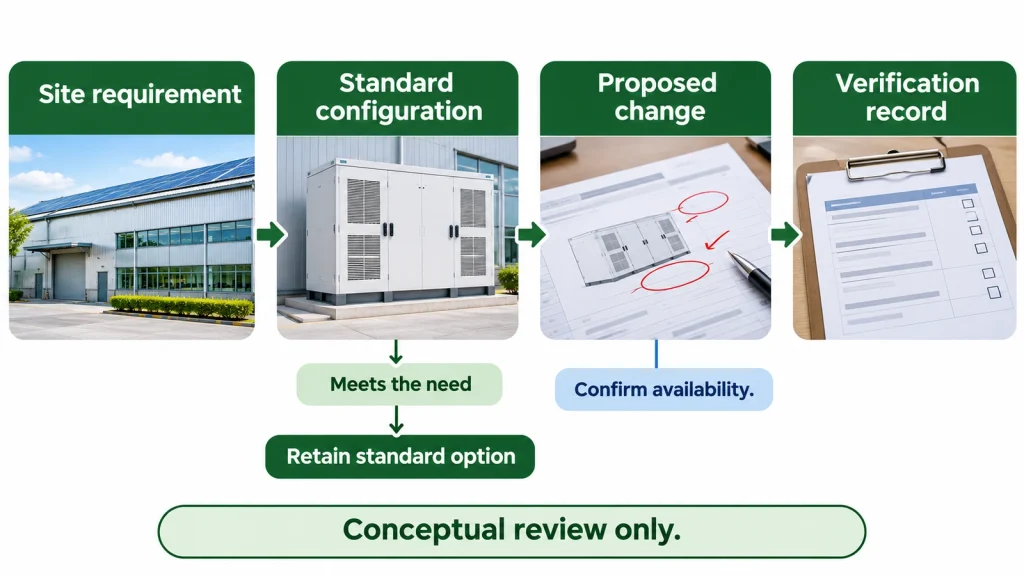
For each gap, record the current standard configuration, the proposed change and the unresolved question. This separates requirements already met, requirements addressed through approved options, and requirements still needing design verification. It is more useful than marking every request as customisable without explaining the route to delivery.
Verify the Equipment Combination Beyond Interface Names
The same LFP chemistry or communication-interface label does not establish compatibility for a complete system. Check the exact battery, PCS or inverter models, relevant software versions and manufacturer documentation. Avoid extending a statement about one tested combination to every product sold under the same brand.
The Victron battery compatibility guidance provides specific information for batteries known to have been tested and separate guidance for batteries outside that list. It illustrates why buyers need equipment-specific evidence. Absence from a list is not automatic proof of incompatibility, and this reference is not a certification or endorsement of Solaura products.
Review Whether the Change Is Worth Making
When assessing custom BESS solutions, connect each change back to the original objective. A feature with no clear operating purpose may simply add validation and maintenance work. Compare a standard configuration, approved options and deferring the change against the same loads and operating goal. More functions do not automatically make a proposal more suitable.
Ask the supplier to separate the effects on equipment, project review, testing, delivery time and service scope. Without quotations and site data, customisation cannot be assumed to cost more, cost less or pay back sooner. Carry the confirmed configuration record into the BESS procurement documents guide workflow instead of relying on a broad promise in an email.
Buyer Questions
Does Custom Mean a Nonstandard Battery?
Not necessarily. An approved combination of standard equipment and site integration may meet the requirement. Ask where the change occurs before requesting a product redesign. Product-level changes should only enter the proposal where their availability and verification route have been confirmed.
Can One Configuration Serve Every African Market?
A regional label is not enough to decide. Even when the same cabinet is considered, the equipment, distribution, environment and operating objective need review for each site. Match the configuration to the project rather than treating the conditions of one installation as a regional standard.
Key Takeaway
Custom BESS solutions are useful when they turn site needs into configuration decisions that can be explained and checked. Start with standard equipment, identify the changes that matter and request evidence for them. Keep unresolved items visible rather than presenting them as delivered product capabilities.
When discussing battery energy storage systems with Solaura, provide the site location, operating goal, existing equipment models and the requirements a standard configuration does not meet. Available options, compatibility and service scope remain subject to project review and the confirmed quotation.
Found this helpful? Share it with your network.
👇